Looking to upgrade your garage into a clean, durable, and high-end space? Whether you're tired of dust and cracks or just want that sleek showroom look, garage floor epoxy coatings are one of the best investments you can make for your home. Living in Edmonton, dealing with our frost snaps and harsh chemicals we put down on our roads, makes it imperative to invest in prepping and coating our concrete floors to prevent damage, deterioration, and eventual replacement of slabs if left untreated.
In this guide, we break down everything you need to know about garage floor epoxy in Edmonton—from the benefits and costs to the application process and design options.
Epoxy flooring is a durable resin-based coating that is applied over concrete. It chemically bonds to the surface to create a seamless, hard-wearing, and attractive finish. Unlike simple paint, epoxy forms a mechanical bond with concrete slab when properly prepped—protecting it for years to come.
Installing garage floor coatings in Edmonton isn’t just about aesthetics—it’s a practical upgrade, especially with Alberta’s fluctuating seasons. The benefits make investing in your floor a no-brainer, as concrete itself isn’t cheap, and becomes even more costly to replace down the road. These are just a few benefits to mention:
✅ Durability Against Snow, Salt, and Slush
✅ Dust and Stain Resistance
✅ Easy to Clean and Maintain
✅ Improved Home Value and Curb Appeal
✅ Slip-Resistant Additives for Safety
✅ Custom Color & Flake Options
✅ UV Stability (Won’t Discolor)
Unfortunately, due to our climate and location, we run into a few issues with Edmonton’s concrete. For one, Edmonton has been known to have the highest amount of coal deposits, which can cause popping on your concrete garage floor. On top of this, main roads in the city are constantly being salted by salt trucks, and just as they eat away at our cars and create rust, the same analogy can be applied to our concrete floors. In Edmonton, the primary de-icing agent applied to roads is sodium chloride, commonly known as road salt. This practice is intended to enhance road safety during icy conditions but has significant implications for concrete surfaces.
Impact on Concrete:
Not all coatings are created equal. Mainstream media and contractors have pushed that one coating is better than the other, that epoxy fails, or that polyaspartic peels. We’re here to debunk myths and provide you with the core facts. Epoxy has been the long-lasting go-to term people relate to with garage floor coatings. Here is how the evolution of coatings developed over the last 100 years:
Epoxy coatings have been around for nearly 90 years, and they've earned a reputation for durability and chemical resistance.
Polyurea is known for its extreme flexibility, chemical resistance, and fast cure time, but it's trickier to apply and more expensive.
Due to the quicker cure times, UV stability, and higher elongation than epoxy, polyaspartics have come to be the most advanced and durable coatings to put down on your garage floor. This isn’t to say that epoxy is worse in any matter.
The main thing we look at is project suitability and the use case for the floor. For example, for clients who have moisture content on their floor and are spec’d an epoxy moisture vapour barrier for a prime coat, the 2nd coat (flake broadcast coat) must be epoxy to bond to the moisture barrier. Where faster cure times aren’t necessary, or a higher build coat for the base is needed, we will then spec epoxy over polyaspartic for the basecoat.
For every floor, we will always use a polyaspartic topcoat, as this provides UV stability and chemical resistance. No garage floor job at EFC is ever topcoated with epoxy, as this can lead to yellowing from not being UV stable. You may have seen in older garages with epoxy installations where the floor begins to amber; in these cases, most likely an epoxy was used for a topcoat. Polyurea is rarely ever used in residential settings as the cure time is too quick for broadcasting flakes, and is often overkill for just passenger vehicles for the additional cost in product.
Here's a breakdown of the most common options:
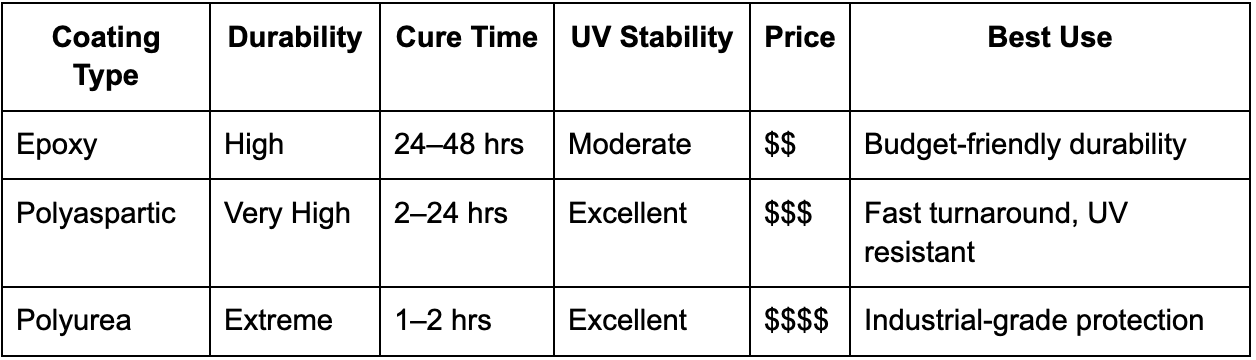
Each system has pros and cons—reach out to us to find out which is best for your garage and climate.
The cost of garage epoxy in Edmonton depends on the square footage, condition of your concrete, and the coating system you choose to go with.
Average Price Range: $6 – $8 per square foot
This includes:
We offer free, no-pressure estimates so you can compare options with full transparency. If a contractor gives you a cheap price, it is often a red flag in our industry as they are either rushing their prep, or not spending time for detail in the finish product. We stick to the TDS, ensure your concrete receives a full CSP of 2 minimum (concrete surface profile that enables a mechanical bond with the coating and concrete), and notify our customers of all expectations for finish options with their floor whether they want multiple topcoats, or a non-slip finish. We are detailed with our systems and offerings as we know that every customer has a different preference, and what they see online may either not be true, or match with a different expectation in person. This is why we always recommend an in-person quote so we can truly gauge the scope of the project and what is needed to exceed your expectations as one of our customers.
Optional add-ons for your floor are as follows:
How long does it take to get that flawless garage finish?
Typical Timeline: 1–2 Days
Your garage doesn’t have to be boring. Choose from:
🎨 Solid Colours (Grey, Tan, White, Charcoal, etc.)
🌪 Metallic Epoxy for a marble-like look
🪨 Flake Systems – Chips in a variety of blends
🦶 Slip-resistant finishes for extra safety
🛠 Custom Colours & Patterns available upon request
The right installer makes all the difference. Here’s what to look for:
✅ Licensed & Insured
✅ Verified Google Reviews
✅ Transparent Pricing
✅ Industrial-Grade Products
✅ Realistic Warranty (Nothing is lifetime)
✅ In-House Crews (not subcontracted)
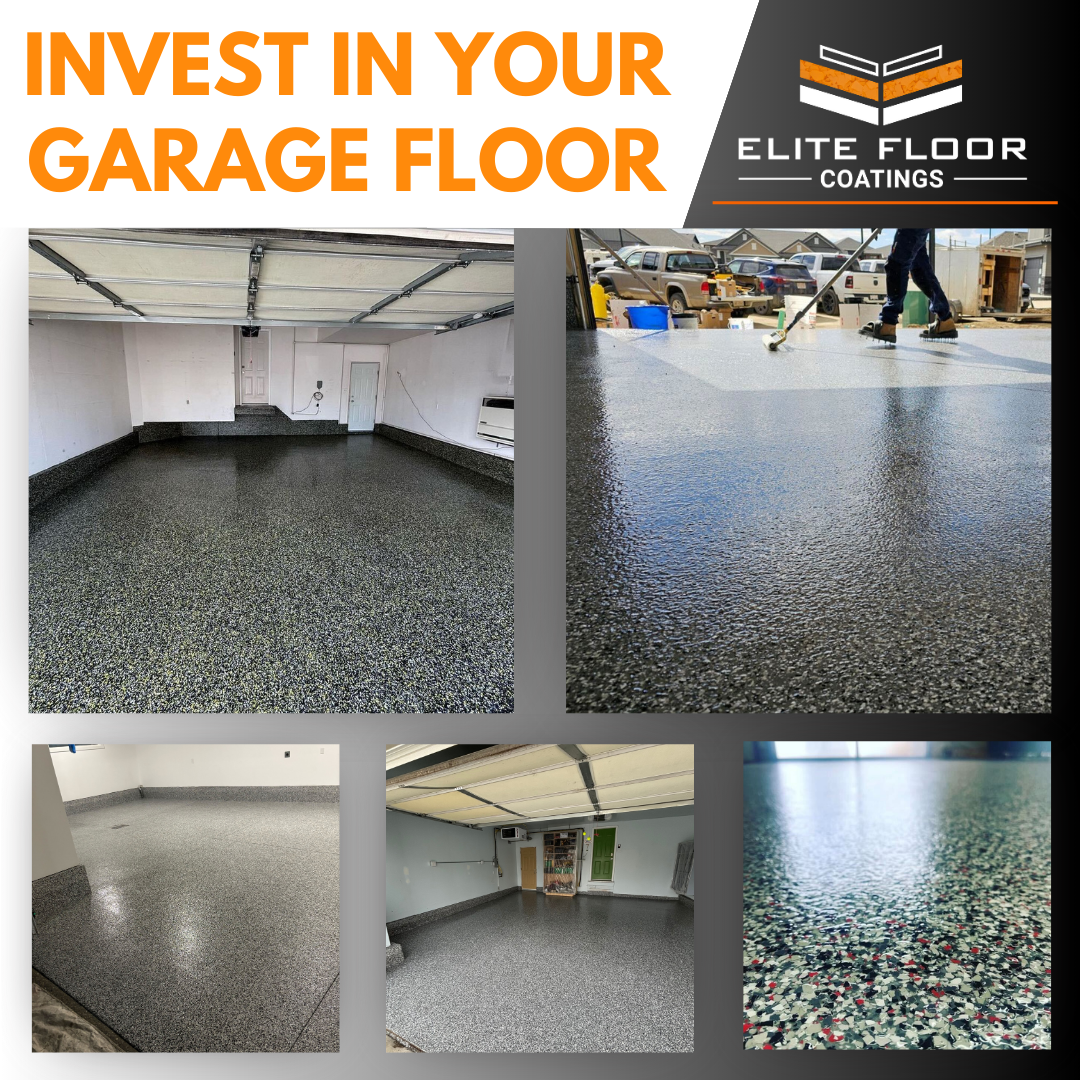
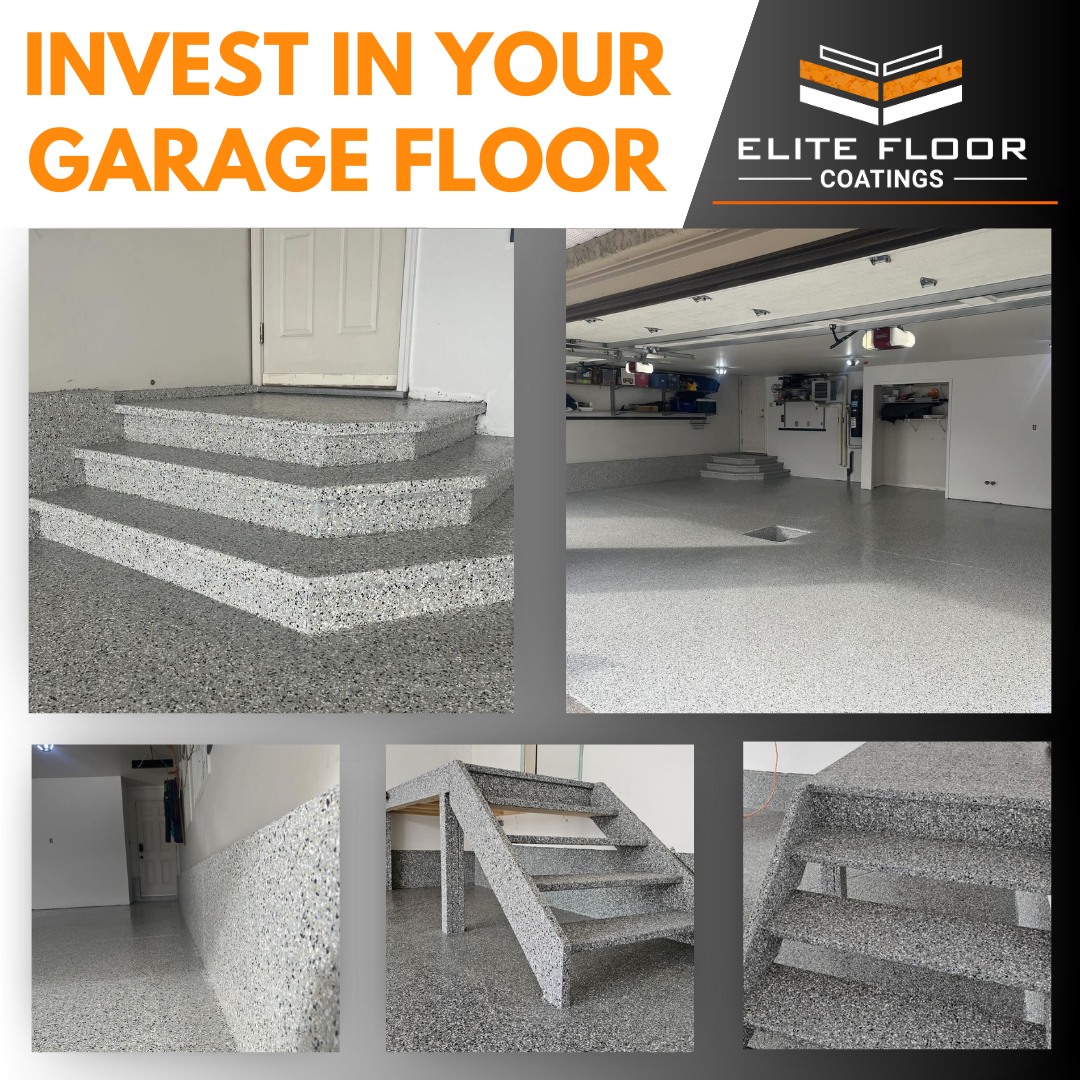
We’ve coated over 500 garages in Edmonton and surrounding areas. Our work speaks for itself—check out the gallery below.
Flake colors can become endless in nature, especially when going down the custom road. This is why we have taken the most popular flakes we have installed, and shortened our flake library to our top 12 that are most popular, for particular use cases. Here is a quick color breakdown to help you navigate what you may want for your home.
Warm Earthy Tones: Best for complementing the exterior of your home, as well as doing a better job of hiding dust and dirt to keep your floors looking “clean”

Bold & Sharp: Best for the homeowner who likes to keep their garage floor “looking like a showroom”. These speak luxury, but also show dirt more easily than color palettes that have brown tones in them.

Subtle Line: These colors are often soft in nature, and don’t make your floor look noisy. They are best for a minimalist feel, still doing a great job of hiding dust and dirt, but making your floor look more subtle in nature vs our other lineups.

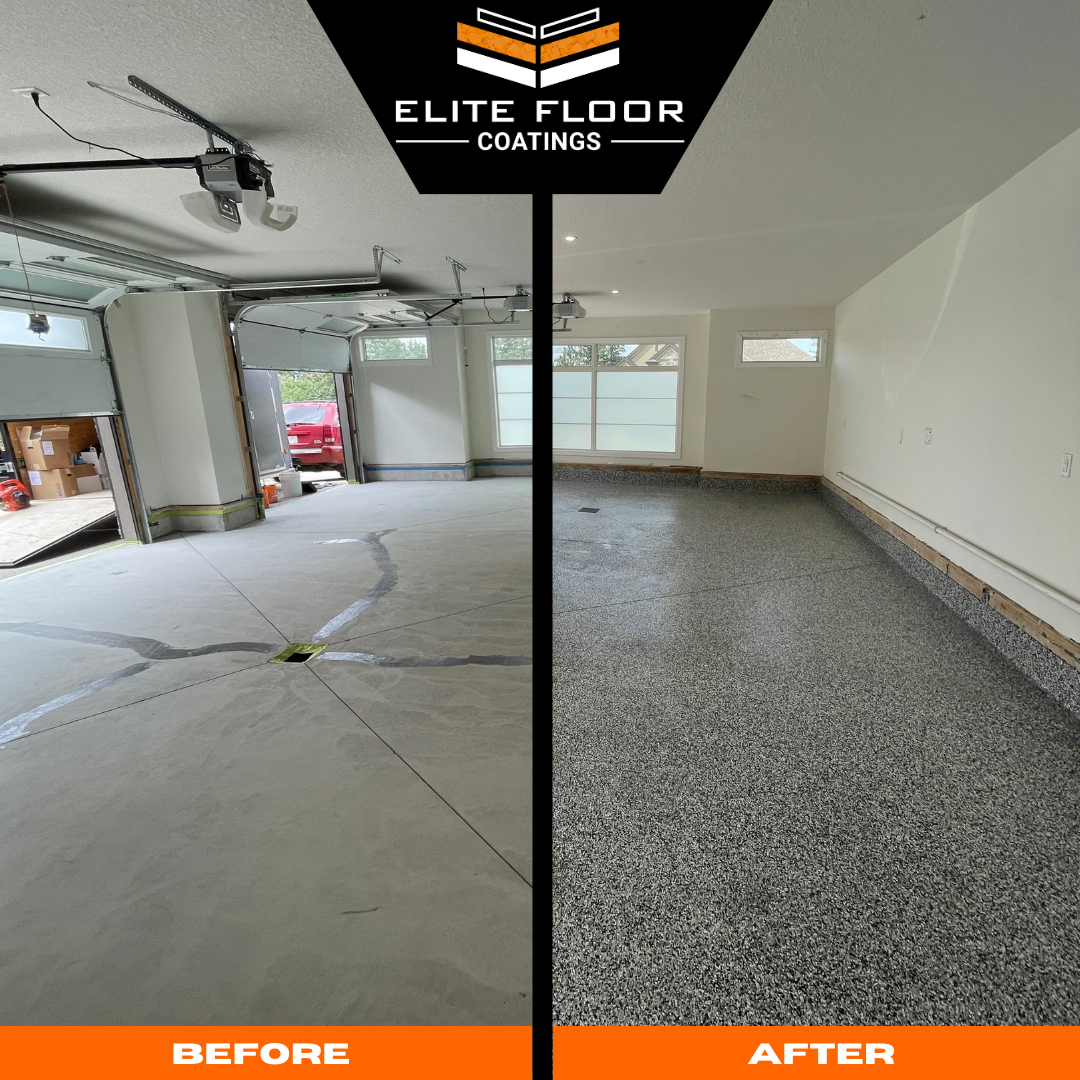
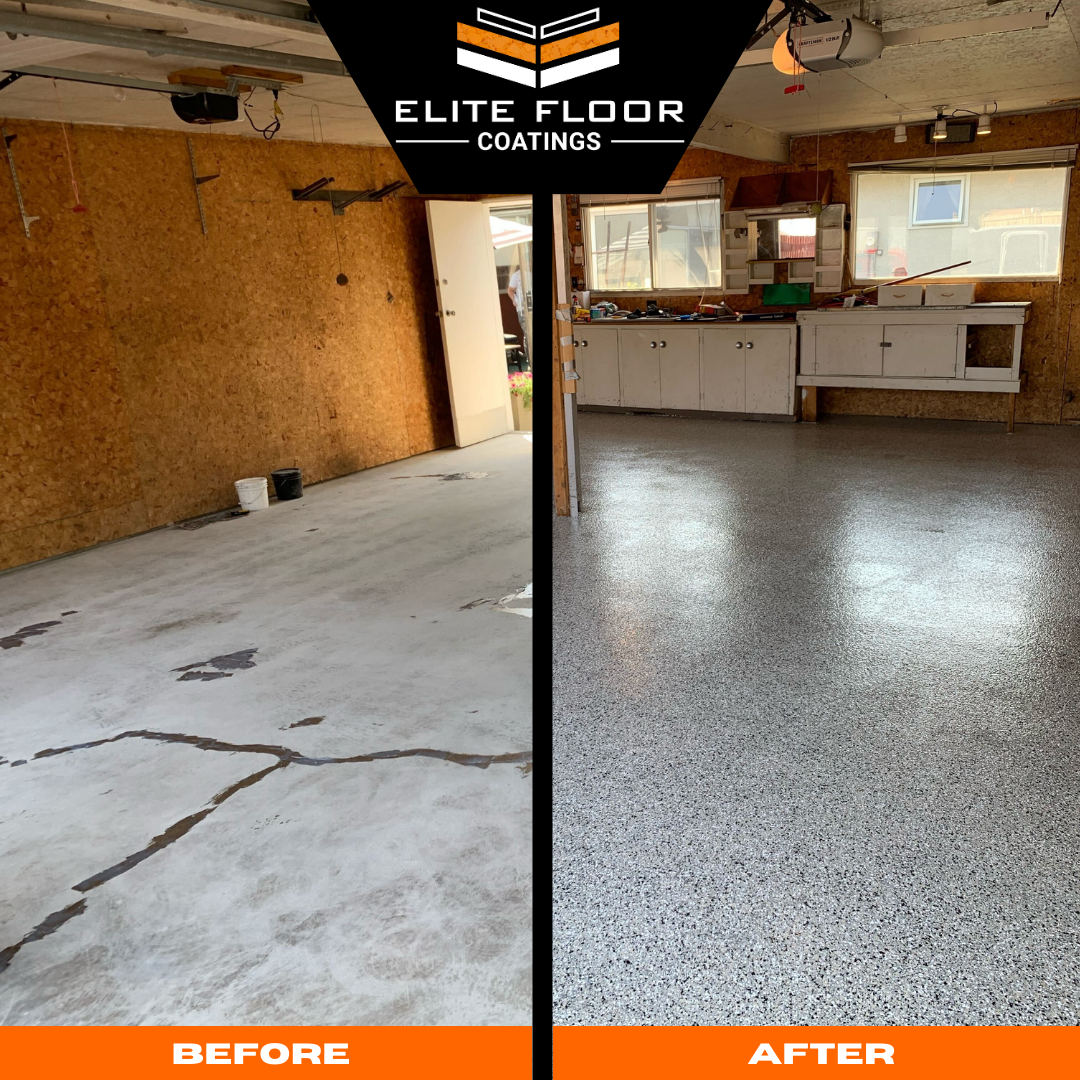
Visual proof matters. See the transformation from bare concrete to stunning, showroom-quality epoxy floors
Q: How long does epoxy last?
A: A professionally installed epoxy floor can last 10–20+ years with proper care. As long as your concrete floor is properly prepped, your basecoat and flakes shouldn’t be affected. Over time, your polyaspartic topcoat may dull out over time, and produce a grey/white tinge from tire treads or heavy traffic. This can be resolved by sanding the floor and reapplying the topcoat of polyaspartic to renew your coating system once again. This is much like vehicle paint and polishing to bring the surface back to life again.
Q: Is epoxy slippery when wet?
A: Without flake, definitely! With flake, it still can be. We add optional slip-resistant additives for traction, even with snow and rain.
Q: Can epoxy crack in winter?
A: Our coatings are designed for Edmonton’s freeze-thaw cycles and come with a 10-year warranty. Ensuring you have a polyaspartic topcoat allows you to have 4x the elongation break that epoxy does, which provides an additional boost for our freeze-thaw cycles in the spring and fall.
Q: How do I clean it?
A: Just a mop, hose, pressure washer, or leaf blower is enough—no special chemicals needed. The nice thing with our floors being chemical resistant, any surface contaminants come off with a breeze.
We hope this educates you on garage floor coatings, what they are about, how they are installed, and what to expect with your epoxy or polyaspartic floor coating.
Ready to transform your garage? Our team at Elite Floor Coatings makes the process fast, easy, and built to last.

.png)
